20 Years of COMI: Because treatment success is more than just an X-ray
How can we determine whether spinal surgery has truly been successful? Not just from the perspective of the treatment team, but from the patients’ perspective? A patient questionnaire was developed at the Schulthess Klinik precisely for this purpose. For two decades, the so-called COMI-back has been helping to reveal how patients are really faring after surgery on the lumbar spine.
The more an artificial intelligence learns, the better it can support doctors. To do this, it requires large amounts of data. But how can this be reconciled with the protection of sensitive patient data? A study led by the Schulthess Clinic shows how several hospitals can train AI models together without exchanging sensitive data.
Spinal research: Early detection of wound infections
It is often difficult to detect a wound infection early on following spinal surgery. Researchers at the Schulthess Klinik and the AO Research Institute Davos have now discovered characteristic changes in the immune system that indicate an infection at an early stage. These findings will help to better identify wound infections following surgery and thus avoid unnecessary follow-up procedures.
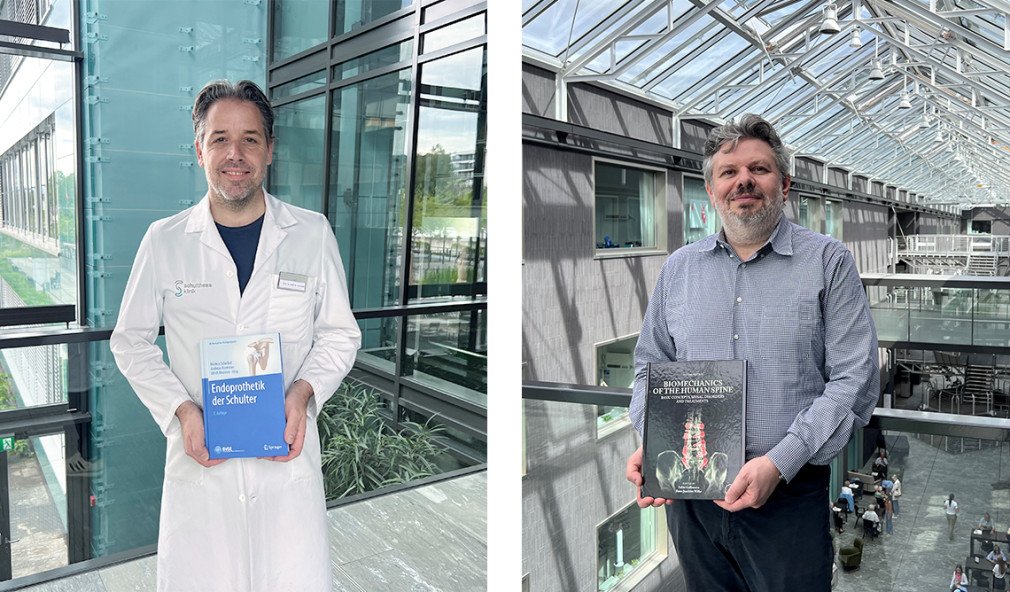
Two specialist books from Schulthess Klinik were published in May: Prof. Dr. med. Markus Scheibel, Head of Shoulder and Elbow Surgery, and Dr. biol. hum. Fabio Galbusera, Head of the Spine Research Group, have each published a new reference work.
Prof. Dr. Friederike Schömig visits the Schulthess Klinik
Last week, Prof. Dr. med. Friederike Schömig paid us a two-day visit. She has been a professor at Charité Berlin since September 2025 and holds the professorship sponsored by the Schulthess Foundation.
We’ve been asking patients how they feel after operations in the form of special patient questionnaires for over 20 years. For the first time, we’re now comparing the results from two different questionnaires relating to the cervical spine. This is an important development in spine research because it will help us to understand which operations genuinely help patients.
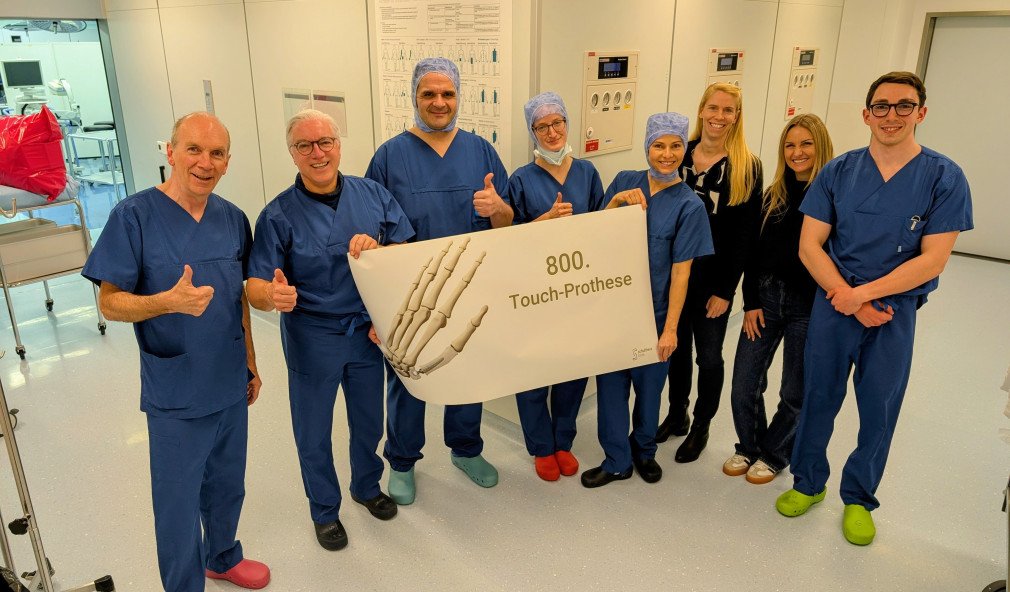
800th thumb carpometacarpal joint prosthesis successfully implanted
A special milestone in hand surgery was reached in January: the hand surgery team at Schulthess Klinik successfully implanted the 800th prosthesis on the carpometacarpal thumb joint.
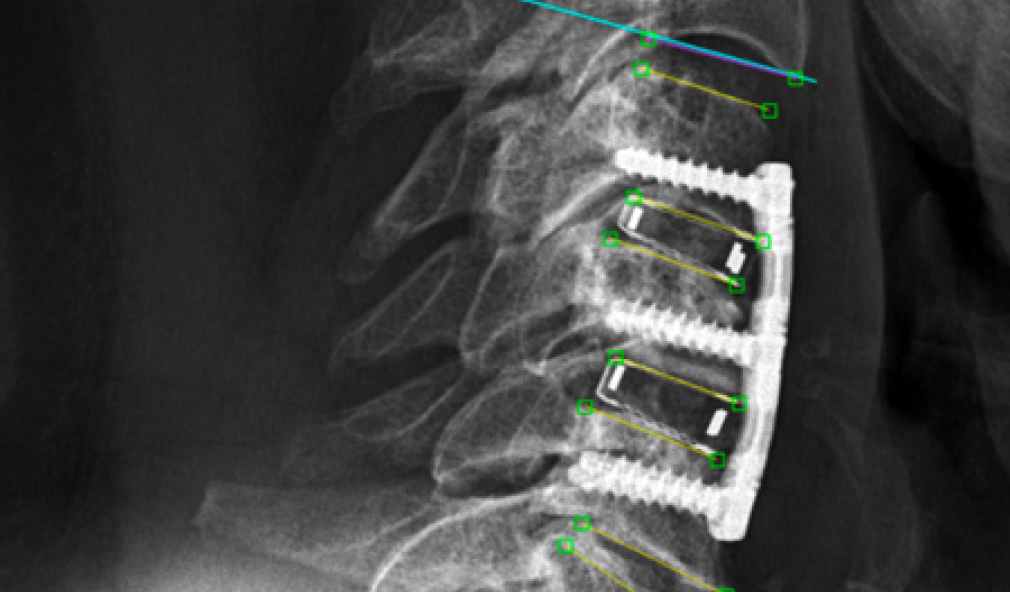
If the neck can be realigned as a result of a spinal operation, the effects can be positive on the whole cervical spine. This has been shown in a study by our spine team.
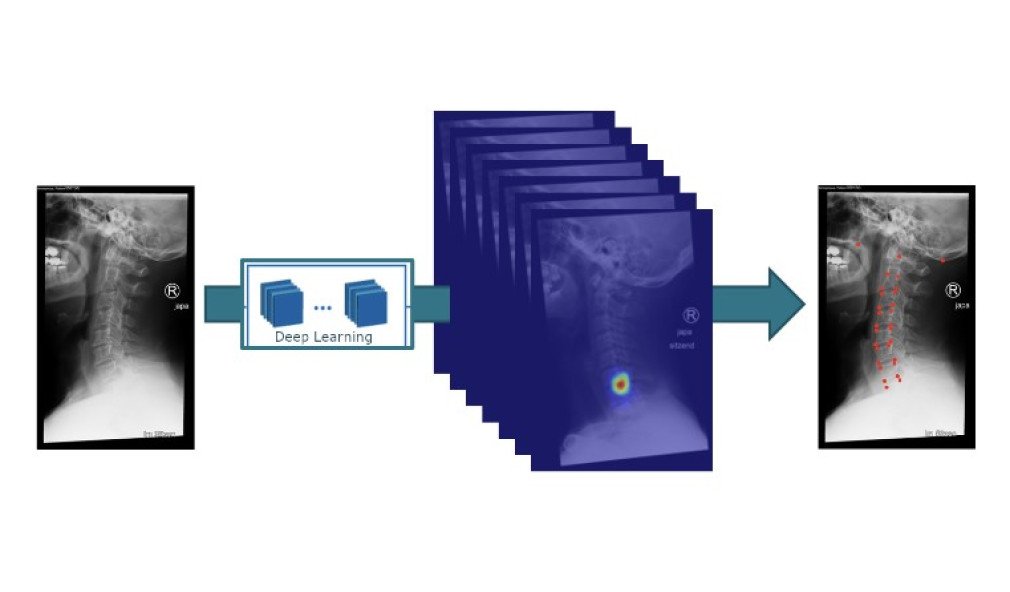
Research: Automatic calculation of cervical spine parameters using deep learning
Researchers at the Schulthess Clinic have co-authored a study that examines a model that allows for more accurate, automatic measurement of spinal parameters during X-rays. The model is based on deep learning and supports surgeons in particular in the diagnosis of adjacent segment disease.
Research award: Successful therapy for painful lateral disc herniation from a patient’s perspective
A Schulthess Klinik research group has received the «Outstanding Special Poster» award from the International Society for the Study of the Lumbar Spine for its research report on a therapy for painful lateral disc herniation.