Featured Spine research: Comparing patient experiences
We’ve been asking patients how they feel after operations in the form of special patient questionnaires for over 20 years. For the first time, we’re now comparing the results from two different questionnaires relating to the cervical spine. This is an important development in spine research because it will help us to understand which operations genuinely help patients.
After an operation on the spine, it’s not enough to just look at the X-ray images. What matters more is how the patients feel: Are they in any pain? Has their mobility improved? How has the operation impacted on their day-to-day life? What is their quality of life like? Here at Schulthess Klinik, we collect all of this data by asking patients to complete a questionnaire. Medical professionals call these standardised questionnaires that patients complete themselves Patient-Reported Outcome Measures, or PROMs for short.
One example is a questionnaire for patients who have had an operation on their cervical spine. Developed at Schulthess Klinik, the Core Outcome Measures Index-neck (COMI-neck) has been used as standard across Europe for 15 years. The aim is always to find out which procedures deliver the best results for patients.
New conversion model
The challenge with PROMs is that different hospitals and studies around the world rely on different questionnaires. This makes it difficult to compare the data and analyse it collectively. In the USA, for example, a different questionnaire is widely used for cervical spine surgery – the Neck Disability Index (NDI). But now, for the first time, there is a reliable way to make the results of these two frequently used patient questionnaires compatible with one another. A conversion model known as a crosswalk is the key.
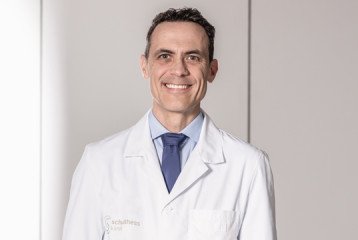
This is an important development: “If we can compare patient experiences more effectively, we’ll gain better insight into the operations that genuinely make a difference,” explains Prof. Dr. med. Markus Loibl, Head of Spine Surgery and one of the authors of the study on this conversion model.
A win for research and practice
This is a major win for treatment practice and research. Now that the results can be converted and compared, a gap has been filled. This facilitates collaboration and supports large-scale international research projects involving multiple hospitals. In the end, this benefits patients. The more readily that treatment results can be compared and the more research that is conducted, the clearer it will become which treatments are most effective for patients with cervical spine issues. In terms of medical technology, it will also become easier to use actual treatment data and develop relevant products.
Large database as a basis
The study is based on data from Spine Tango. Schulthess Klinik has been contributing to this international spine registry for many years and recording treatment results there. Data relating to over 600 patients who have had operations has been analysed. All of them completed both questionnaires before and after their procedures.
The study has been published in the European Spine Journal.