Featured Lower costs, yet still the best solution for the hand
New generations of artificial joints promise less pain and a faster return to day-to-day life. However, can we afford such innovations in the face of rising healthcare costs? A study conducted by our Hand Team answers this with a clear yes to a modern artificial joint for osteoarthritis of the trapeziometacarpal joint.
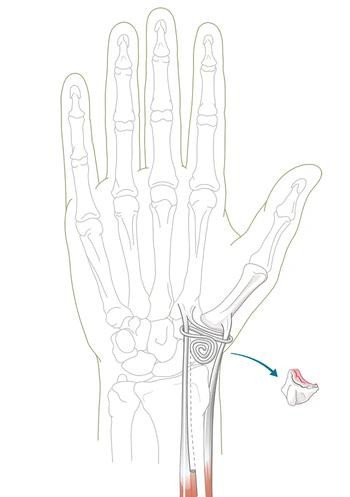
People with osteoarthritis of the trapeziometacarpal joint are often severely impacted. Gripping, writing and opening bottles become difficult. For a long time, resection arthroplasty was regarded as the international standard of treatment. This involves complete removal of the damaged bone. The joint is stabilised with an endogenous tendon. Although this alleviates pain, it takes time for hand function to recover.
Better results with a modern artificial joint
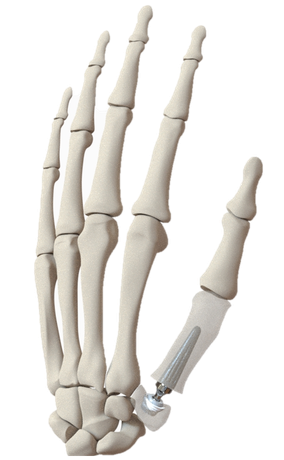
At Schulthess Klinik, we have been using a new generation of artificial joints for the trapeziometacarpal joint since 2018. In this process, only a small part of the bone is removed and the joint is retained. International studies show that patients are more satisfied and can use their hand sooner in their day-to-day lives and with better grip.
So far, the critical point has been that the implant incurs additional material costs. This is exactly what our study set out to evaluate.
Clear figures, clear results
We performed a systematic cost-utility analysis of the two surgical methods. The result is unambiguous: although surgery with an artificial joint is initially more expensive, the total costs over a year are around CHF 7,000 lower than for traditional surgery. The main reason for this is not found in the operating theatre, but in day-to-day life afterwards. Patients with the artificial joint have fewer limitations, regain hand function more quickly, and can return to work sooner. At the same time, their quality of life is measurably higher.
Our study therefore clearly shows that the modern artificial trapeziometacarpal joint is not only better for those affected, but also for the healthcare system.
We would like to thank all patients who took part in the study and completed the questionnaires in full. The study was funded by Keri Medical SA (Switzerland), the manufacturer of the artificial joint, and published in the Journal of Hand Surgery (American Volume).