Featured New study makes it easier to conduct patient surveys following hand surgery
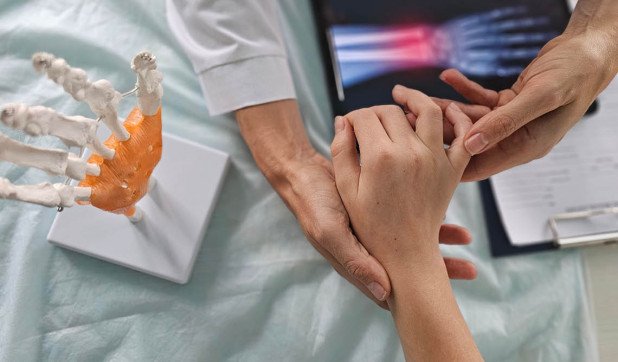
How well does the hand function again in everyday life following treatment? That is precisely what interests us at the Schulthess Klinik. A new study now shows that significantly fewer questions are needed than before to assess this reliably. This makes patient surveys easier and, at the same time, helps to further improve treatments.
Following hand surgery, it is not just a question of whether the procedure was technically successful. What matters most of all is how patients feel afterwards. Has the pain subsided? Is the hand functioning better again in everyday life? Has their quality of life improved?
To find answers to these questions, we have been surveying our patients for many years using standardised patient questionnaires. These help us to understand which treatments deliver the greatest benefit. A new study by our hand surgery research team has now shown that one of the most widely used questionnaires worldwide can be significantly shortened without losing any of its validity.
From 37 to 16 or even just 4 questions
The «Michigan Hand Outcomes Questionnaire» is used worldwide to assess treatment outcomes following hand conditions and injuries. Until now, it has comprised 37 questions. The research team at the Schulthess Klinik has now demonstrated that, depending on the application, as few as 16 or even just four carefully selected questions are sufficient to obtain an equally reliable picture of treatment outcomes. «Fewer questions mean less effort for patients and make data collection easier in day-to-day clinical practice – without compromising scientific validity», says Dr. Daniel Herren, Head of Hand Surgery.
This also benefits research. The easier it is to use patient questionnaires, the easier it is to systematically record treatment outcomes. This knowledge helps to continuously improve treatments – for the benefit of future patients.
For the study, the research team analysed data from over 72,000 patients in the Netherlands provided by our collaboration partner, the Erasmus Medical Centre in Rotterdam, as well as additional data from 623 patients in Switzerland.
Read the full study here.